Emergency Pest Service in Rutgers University-Livingston Campus, NJ
Active pest outbreaks require urgent field intervention. From destructive termites in structural framing to rodents nesting in attic insulation, our dispatch team connects Rutgers University-Livingston Campus property owners with local exterminators ready to halt infestations.
Emergency Pest Service in Rutgers University-Livingston Campus, NJ
German cockroaches multiply at an alarming rate, producing egg capsules containing up to forty nymphs every few weeks in Rutgers University-Livingston Campus kitchens. Aggregating behind warm refrigerator compressor motors, under sink drains, and inside cabinet hinges, these nocturnal scavengers spread foodborne bacteria across countertops. Superficial aerosol sprays fail to contact concealed harborages where reproducing females deposit durable egg cases.
Eliminating entrenched cockroach colonies demands multi-phase bait matrices formulated with appetizing proteins and juvenile hormone mimics. Insect growth regulators prevent developing nymphs from maturing into breeding adults, rendering the population sterile. Meanwhile, high-potency gel baits placed inside tiny hinge crevices trigger horizontal mortality through natural scavenging behavior, systematically collapsing the primary nesting harborage.
Sanitation guidance and targeted void dust applications prevent cockroach colonies from rebounding after initial treatment. Technicians inspect appliance motor consoles and seal plumbing gaps to eliminate access to moisture. Eliminating reproductive harborages and deploying juvenile hormone mimics ensures clean residential and commercial food preparation areas throughout Rutgers University-Livingston Campus.
Available Extermination Treatments in Rutgers University-Livingston Campus
- Emergency Pest Control: Urgent 24/7 field extermination targeting active stinging insect swarms, dangerous spiders, and acute wildlife or crawling insect outbreaks.
- Bed Bug Extermination: Whole-home thermal heat remediation and targeted residual treatments that destroy bed bug nymphs, adults, and microscopic eggs in a single session.
- Rodent & Rat Control: Complete rodent eradication, attic insulation decontamination, and structural entry exclusion sealing for roof rats, Norway rats, and house mice.
- Termite Treatment & Inspection: Non-repellent liquid soil barriers, electronic moisture detection, and in-ground baiting systems that eradicate subterranean and drywood termite colonies.
- Cockroach Control & Removal: Aggressive multi-phase cleanouts utilizing insect growth regulators, microencapsulated residuals, and specialized gel baits for German and American roaches.
Our Treatment Roadmap
Targeted extermination starts by isolating active infestation zones to stop pests from migrating into adjoining living quarters. Field specialists evaluate structural layout, moisture levels, and evidence of gnawing or frass across your Rutgers University-Livingston Campus building. We then establish an immediate treatment plan utilizing non-repellent baits, desiccant dusts, or thermal heat according to species behavior.
After applying primary colony knockdown treatments, specialists focus on durable structural exclusion. Sealing foundation weep holes, pipe openings, and roofline soffits with heavy-gauge galvanized materials denies pests future entry points. Targeted barrier placements ensure crawling pests cannot establish replacement nesting colonies on properties in Rutgers University-Livingston Campus.
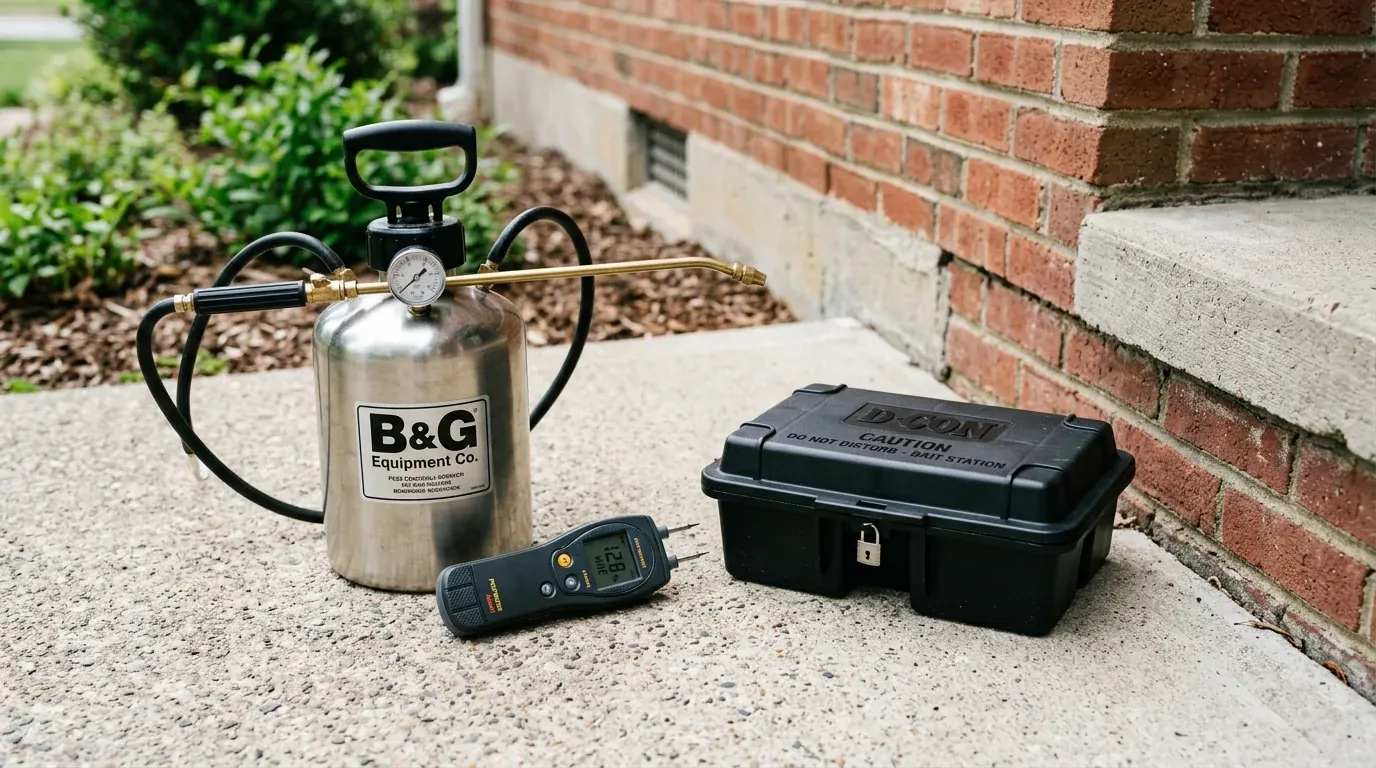
Industry-leading equipment & EPA-registered formulations deployed across Rutgers University-Livingston Campus:
What property owners in Rutgers University-Livingston Campus are saying
"Hearing scurrying inside our kitchen drywall made it impossible to sleep. The exterminator tracked grease rub marks behind our stove, sealed a gap around the copper gas pipe, and trapped three house mice within forty-eight hours."
"Persistent scratching noises behind our basement drywall turned out to be Norway rats burrowing under the foundation footing. The specialist mapped the outdoor burrows, placed tamper-proof bait stations along the foundation wall, and halted the burrowing permanently."
"Piles of discarded wings near our basement patio door revealed a mature termite colony we had no idea existed. The crew dug a foundation trench, applied non-repellent soil termiticide, and protected our structural framing before the joists softened."
Serving Rutgers University-Livingston Campus, NJ
Questions about Pest Control in Rutgers University-Livingston Campus
Local Services in Middlesex County
Stop Pest Outbreaks in Rutgers University-Livingston Campus Today
Do not let bed bugs, chewing rodents, or wood-destroying termites multiply. Contact our dispatch desk for fast local treatment.